|
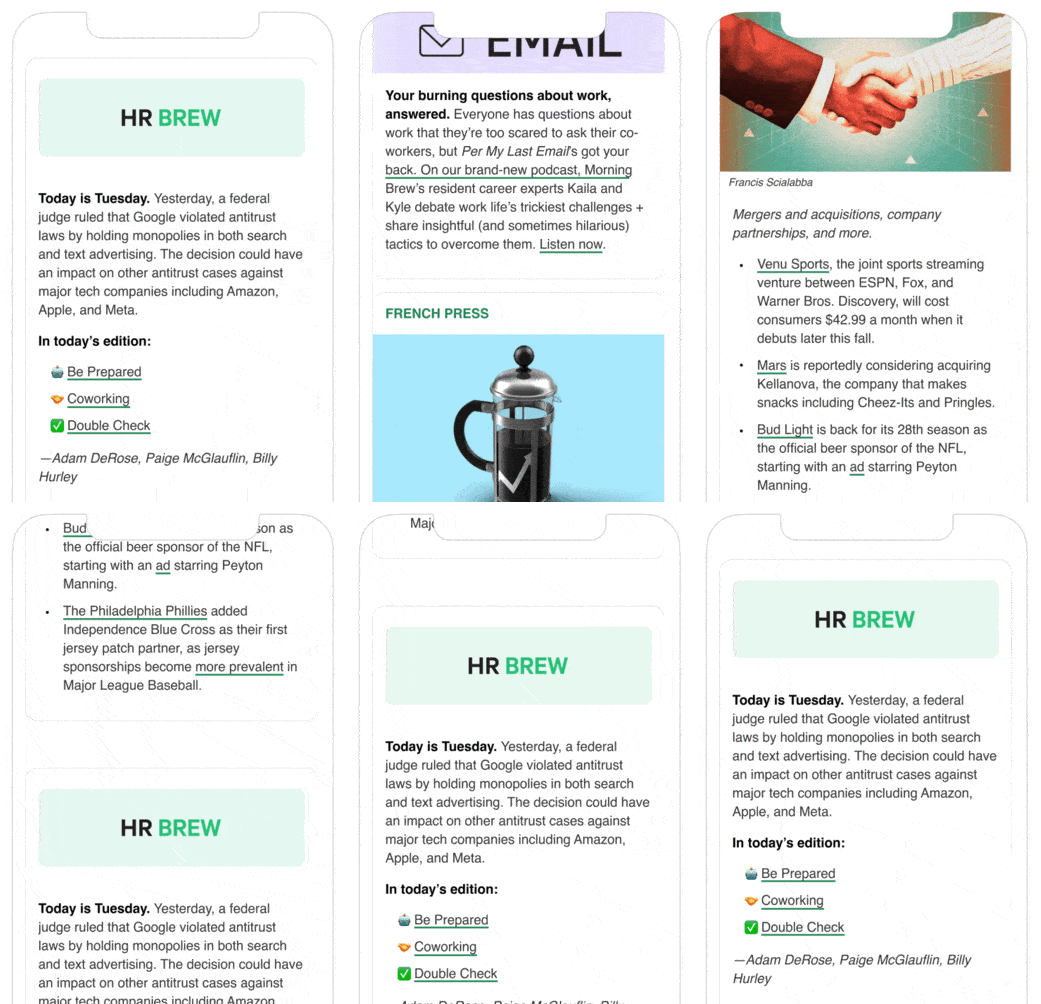
Happy Tuesday! In today’s edition of news you can use: Gossip can strengthen workplace relationships (within reason). Team building on a budget? Check.
In today’s edition:
 Delays ahead Delays ahead
 HR 101 HR 101
 Starting up Starting up
—Courtney Vinopal, Amanda Schiavo, Adam DeRose
|
|
Nuthawut Somsuk/Getty Images
|
BlackRock CEO Larry Fink addressed the retirement crisis in his annual letter to investors on March 26, making the case that Americans should work later into their lives in light of demographic and economic factors straining the system.
Around the world, workers are living longer lives, making it more challenging to save enough for retirement, Fink wrote in his letter. Pension enrollment in the US is on the decline, and an aging workforce is putting a strain on the Social Security Administration, which says it will not be able to pay people their full benefits by 2034.
Fink challenged “our anchor idea for the right retirement age—65 years old,” in light of these trends. (Americans can receive Social Security starting at age 62, though they don’t start to receive full retirement benefits until they’re either 66 or 67, depending on when they were born.)
The prospect of an aging workforce, as described by Fink, would mean HR departments may not only have to find ways to hire and retain older workers who are capable of working for longer, but also help employees think more carefully about saving for retirement.
Keep reading here.—CV
|
|
PRESENTED BY CLEARCOMPANY
|
|
Imagine instantly receiving a list of qualified candidates as soon as you open a requisition. HR pros everywhere are likely swooning at the thought—and we wouldn’t blame ya. Sourcing and hiring is tough, and anything that can make the process easier feels kinda magical.
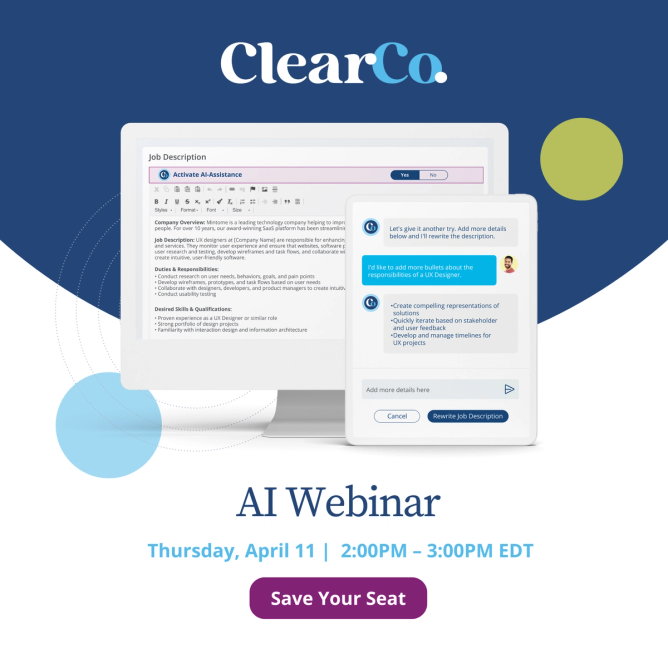
That’s why ClearCompany’s bringing the magic with their free webinar: Step Into the Future of Hiring with ClearCompany’s AI Assistant.
Learn how ClearCompany is leveraging AI to help tackle time-consuming routine tasks, improve candidate comms, and even identify high-potential talent. ClearCompany’s webinar will be led by expert speakers who will provide a guided demo of how their AI Assistant can amp up your talent sourcing, screening, and strategies.
Want in? All you’ve gotta do is save your seat. And if you can’t make it, sign up to receive the recording instead.
|
|
Francis Scialabba
|
Welcome to HR 101. Class is now in session. Today’s discussion will focus on sabbatical leave.
The history. A sabbatical is an extended leave (paid or unpaid, depending on the organization), during which an employee can spend time studying, traveling, or focusing on personal growth, with the intention of returning to their job. They have ancient roots in the Hebrew Sabbath and shmita, a biblical law that suspended all land cultivation and debt collection for one year every seven years.
The modern sabbatical has become associated with academia, but corporations have also been known to offer staff a period of extended leave following a certain tenure with the company. Take, for instance, Intel, which is often credited with being among the first Silicon Valley companies to offer sabbatical leave when it was founded in 1969. Its employees can take a four-week paid sabbatical following four years of eligible employment, or an eight-week paid sabbatical after seven years with the company.
Fast-forward. As of 2019, 11% offered unpaid sabbatical leave, while just 5% offered paid sabbatical leave. As HR looks for new ways to recruit and retain talent, they may want to consider offering sabbatical leave, according to HR consultancy Clark Schaefer Strategic HR.
Keep reading here.—AS
|
|
|
Each week, we get into the weeds with the founders of HR tech startups. Want to tell us about your company? Get in touch here.
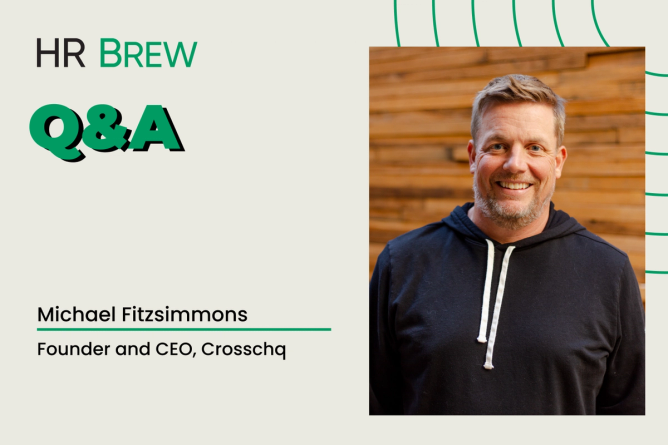
As an entrepreneur, Michael Fitzsimmons has done his fair share of hiring. He has even relied on pricey executive search firms to fill top posts in the past, and some of those hiring decisions contributed to negative business outcomes.
So, in 2018, Fitzsimmons got to thinking about designing a tool to help companies make better hiring decisions. Crosschq was originally designed as a tool to disrupt the reference check, but Fitzsimmons soon realized the issue with good hiring goes beyond reference checks. Talent acquisition teams need ways to judge the “quality of hire”—not simply butts in seats, but assessing if a hiring decision meets a business goal.
This interview has been edited for length and clarity.
What specific issue in HR does your company intend to solve?
[Crosschq] helps talent acquisition teams save time and money while making better hires…It’s an integrated platform [that] brings together data across the recruiting life-cycle to improve hiring outcomes…Now it takes you literally 30 seconds from your ATS to trigger a Crosschq 360, versus the four-to-six hours that would have taken by doing those things manually.
Keep reading here.—AD
|
|
|
Lead like it’s 2099. Times are a-changin’ so fast, it feels impossible to wrap your head around it all. But prepping the next gen of leaders? That’s a must. Paylocity’s new e-book, Leadership for the 21st Century, has everything you need to know about the future of leadership. Embrace what (and who) comes next.
|
|
Francis Scialabba
Today’s top HR reads.
Stat: Four in 10 execs expect their staff to shrink in the next five years as a result of AI disruption. (the Adecco Group)
Quote: “We’re committed to collaborating across sectors to ensure workers of all backgrounds can use AI effectively and develop the skills needed to prepare for future-focused jobs.”—Lisa Gevelber, founder of Grow with Google, on the AI-Enabled ICT Workforce Consortium, a collective of companies including Google, IBM, and Microsoft aimed at upskilling tech workers (VoIP Review)
Read: Poor “policy hygiene” can negatively affect an employer’s recruitment, retention, and engagement strategies. (Personnel Today)
Hiring shouldn’t be tiring: ClearCompany agrees. That’s why their free webinar covers how their AI Assistant can elevate talent screening and strategies to supercharge your sourcing. (Say that five times fast.) Register to watch.* *A message from our sponsor.
|
|
|
When’s the last time you landed a job by applying cold? We’ve partnered with CollabWORK, the first community-powered hiring platform, to bring you curated jobs from companies looking to connect with HR Brew readers. Apply below and join CollabWORK for free.
|
|
|
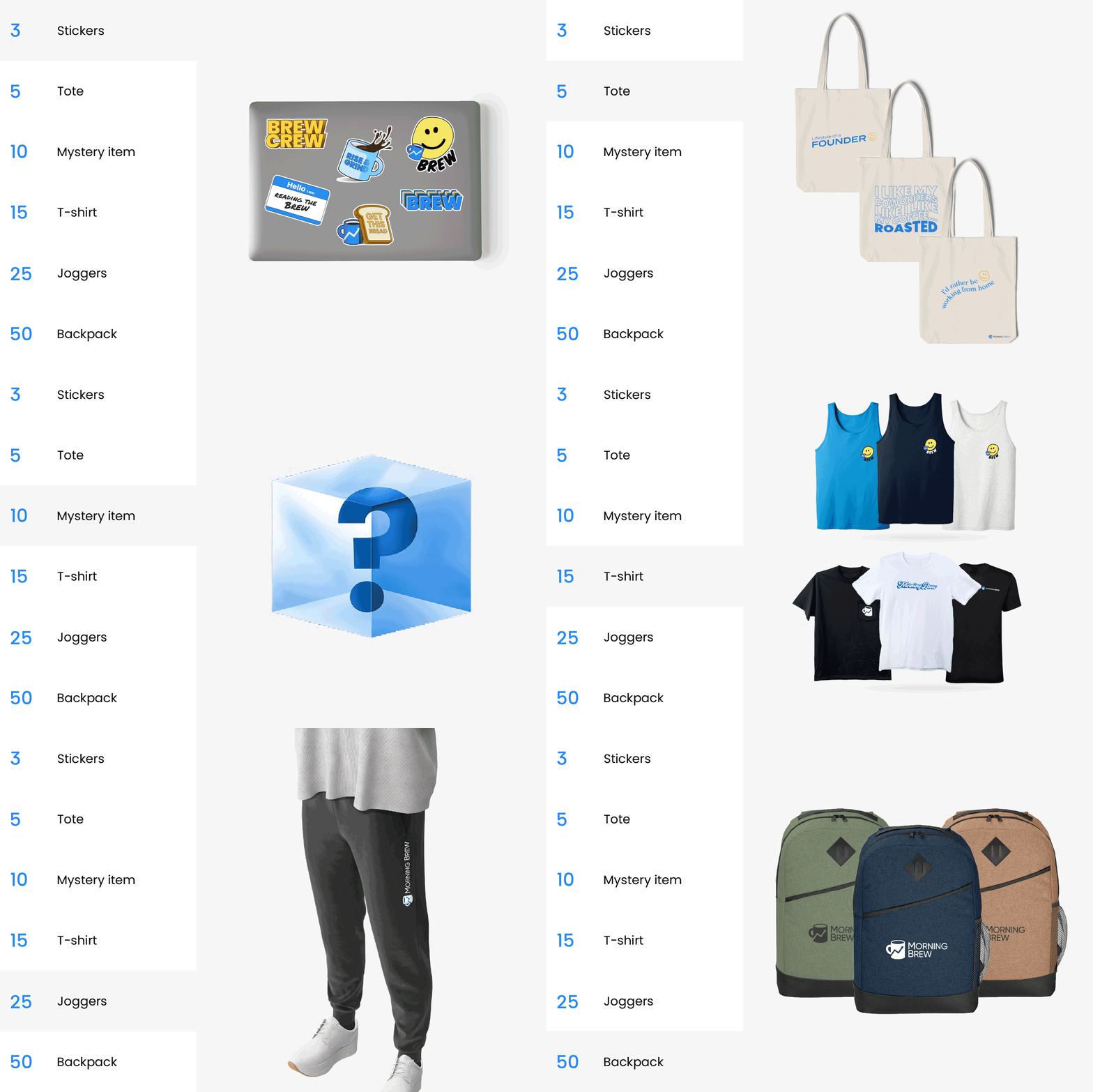
Share HR Brew with your coworkers, acquire free Brew swag, and then make new friends as a result of your fresh Brew swag.
We’re saying we’ll give you free stuff and more friends if you share a link. One link.
Your referral count: 2
Click to Share
Or copy & paste your referral link to others:
hr-brew.com/r/?kid=9ec4d467
|
|
|