Happy Friday! Sure, teamwork makes the dream work…It can be hard to get your team on the same page. The Brew’s Building High-Performance Teams can help with that. Sign up now and get ready to turn your team into a well-oiled machine.
In today’s edition:
 A helping hand A helping hand
 Technically HR Technically HR
 What’s your opinion? What’s your opinion?
—Kristen Parisi, Adam DeRose, Tammy Thieman
|
|
Oksanatkachova/Getty Images
Everyone needs a helping hand sometimes, whether for something small, like reaching an item on a high shelf, or big, like support through an illness. For workers experiencing challenges in their personal lives, an employee assistance program (EAP) can be a place to turn to for help.
Daniel Hughes has helmed Mount Sinai’s EAP since 1986. He recently spoke with HR Brew about why EAPs are necessary, their connection to HR, and the importance of employee confidentiality.
EAP, defined. EAPs have been around in the US since the 1940s and were initially designed to help workers with alcoholism, the US Office of Personnel Management states. They’re intervention programs that can be essential in high-risk workplaces such as prisons, medical centers, and schools, and they provide advice and support to employees who may be struggling with a variety of personal problems, according to research. EAPs offer services like financial counseling, referrals to expanded support, and legal services.
How the industry evolved. When Hughes joined Mount Sinai’s EAP team in the 1980s, it was just one person. “We (the US) were in the midst of the crack cocaine epidemic,” he explained. “The HIV issue was unfolding. And crack cocaine was creating significant problems in the local community in the form and in our workforce.”
And so, programs evolved to combat other forms of substance abuse. Hughes said employers learned decades ago that it was in their best interest to invest in employee well-being as a means of reducing potential productivity pitfalls. By the mid-1980s, EAPs adopted the “broad brush approach,” helping employees with anything that could impact their health.
Keep reading here.—KP
|
|
More than 70% of Americans oppose AI’s use in final hiring decisions. Despite this, nearly 1 in 4 organizations plan to increase their use of AI tools in hiring and recruitment. Even with all the praise for automation, it seems like workers miss the human element.
HR professionals should take note of this report from Tech Brew that dives into how applicants respond to new hiring tools like personality tests and chatbots. This report can give insight into establishing standards for objectivity and avoiding bias in algorithms. Check out the statistics and implications here.
|
|
Frank Scialabba
Things can be easier with a partner, and for KPMG, investing in a partnership with Microsoft might be the move that upends how professional services use generative AI and other technology. At least, that’s the bet.
KPMG, one of the Big Four accounting and professional services firms, announced a new partnership with Microsoft to develop a suite of new generative AI and cloud tools to transform how its employees and clients do business.
The company plans to invest $2 billion over the next five years alongside Microsoft, according to media reports. KPMG CEO Paul Knopp told Bloomberg Technology he expects a return of $12 billion in the coming years.
Plans for the new partnership include embedding machine learning models, natural language processing (NLP) capabilities, and AI analytics into more tools and solutions that KPMG provides to clients, housed in a secure cloud, not an open-source setting like ChatGPT.
As the nascent technology precipitously makes its way into corporate America, adopting generative AI has excited many execs, but their employees may be more fearful. Knopp isn’t worried that the commitment will displace workers.
“I actually believe that workforces over time will grow with generative AI,” Knopp said when asked about how the partnership may affect KPMG’s 265,000 employees worldwide.
Zoom out. The adoption of generative AI could generate up to $4.4 trillion annually, according to a new McKinsey report, and dramatically change what work is done by humans between 2030 and 2060. The tools will also boost productivity, and workers who perform duties replaced by the technology will need help learning new skills to participate in an AI economy, according to the report.
Keep reading here.—AD
|
|
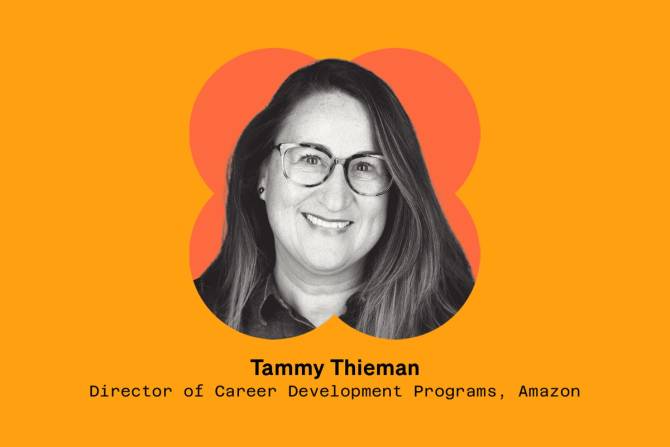
Tammy Thiemen
The needs of our workforce are drastically changing, and a movement is underway. Coming out of the pandemic and into the current economic climate, employees across industries are going beyond purpose and company perks, in need of something more tangible from their employer: new skills.
One of the biggest challenges for employers is to meet the varying needs of their employees, and to offer programs that can differentiate their company to potential employees in a competitive job market.
While required skills fall across a continuum, one of the foundational and critical workplace skills needed today is typically local language. Employers can stay ahead of the shifting career skills landscape by offering language programs—an important but often overlooked component of corporate skills training initiatives.
With almost 1 out of every 10 working-age adults in the United States reporting limited English language skills, it’s not hard to see how the lack of a shared language can be holding them back from advancing to higher-skilled and better-paying jobs. Language programs are no longer a nice-to-have—they’re a necessity for employers seeking to retain talent in a competitive market.
Supporting sustained growth. Language skills benefit employers; in fact, multilingualism, diverse worldviews, and cross-cultural competencies are linked to improved workplace communication and innovation and can ultimately drive the bottom line.
Keep reading here.—TT
|
|
Francis Scialabba
Today’s top HR reads.
Stat: 46% of new college graduates feel AI threatens their job prospects. (Cengage)
Quote: “Systems and software, not humans, are increasingly making decisions on whom to interview for a job, where and when employees should work, and who gets promoted, disciplined, or even fired from their job.”—from a summary of the No Robot Bosses act from Senator Bill Casey’s office (NBC News)
Read: How employers can take a “human-centered” approach to disability inclusion. (the New York Times)
The loneliness epidemic: The Surgeon General sounded the alarm about the loneliness epidemic, and HR leaders must address its impact. Join experts from Google and more in a conversation on fostering belonging in the workplace.*
*This is sponsored advertising content.
|
|
|