Happy Friday! It’s National Fun Day at Work. When unhappy employees cost companies trillions of dollars (more on that below), an early dismissal or office pizza party shouldn’t be too hard to justify…
In today’s edition:
 Technically HR Technically HR
 Robot risks Robot risks
 Book club Book club
—Adam DeRose, Mikaela Cohen
|
|
Francis Scialabba
The concept of “Zoom fatigue” is real. A recent study of university students found detrimental effects to participants’ fatigue levels after video conferencing on apps like Zoom, Teams, and Google Hangouts.
Our virtual and flexible world of work also poses significant challenges for employers and HR pros: team cohesion, employee isolation, communication woes, and costs associated with travel bringing disparate employees together. Microsoft is betting virtual reality may help address some of these concerns.
“We’ve done a ton of work over the last few years to make these hybrid meetings now more effective and more inclusive,” said Microsoft’s Nicole Herskowitz, VP of Teams. “But what we also know is that to really have a truly flexible workplace, employees are going to just need new technologies that help them feel more connected.”
Microsoft is bringing its VR technology—Microsoft Mesh—to Teams, allowing for three-dimensional immersive experiences for Teams meetings.
Keep reading here.—AD
|
|
PRESENTED BY BETTERMENT AT WORK
|
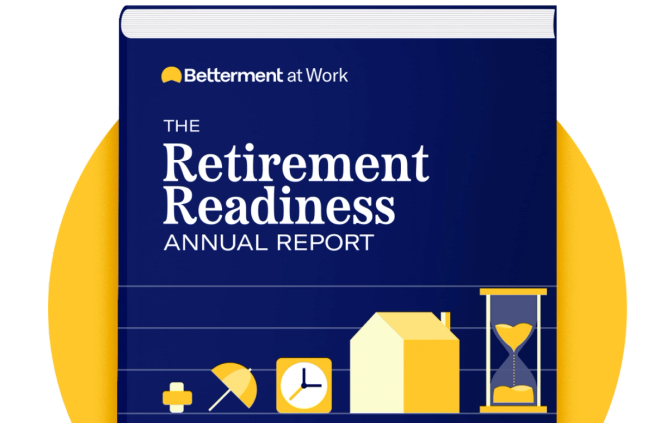
Here’s a tough stat to swallow: 64% of employees say student loan debt makes it harder to save for retirement. In a year marked by the soaring cost of living and turbulent markets, employees are worried about their futures.
To help, Betterment at Work surveyed 1k full-time employees to see how employers can better address these concerns in 2024. The results are pretty telling.
Check out some of their findings:
- Only 40% of employees said they feel financially stable, with a stark difference between genders.
- 60% said they’d be enticed to leave their job for an employer that offers better financial benefits.
-
58% of employees said financial anxiety made it difficult to focus at work.
Get the report and meet your employees where they need help.
|
|
Guillaume/Getty Images
The generative AI train has left the station. HR pros must be equipped with the skills and confidence to navigate these tools as more companies deploy the tech at work.
“What we know is 99% of the Fortune 500 are absolutely using artificial intelligence in various aspects,” labor attorney Natalie Pierce told HR Brew. “Everything from hiring to promotion to predicting who might be the employees who are looking to make a move.”
Pierce is a partner with Gunderson Dettmer, specializing in employment and labor law. Over the last several years, she has taken a keen interest in technology and the future of work. “I think especially smaller employers are nervous about using the [generative AI] tools because they’re not sure how they can do it without running afoul of the legal landscape,” she said.
SMB people pros and mighty HR-teams-of-one, we want to help quell those nerves. We asked Piece to help us understand how to best ask generative AI questions while minimizing risks.
Keep reading here.—AD
|
|
Grant Thomas
William Shakespheare once wrote “all the world’s a stage,” and for recruiters today, artificial intelligence seems to be at the center of that stage.
In The Algorithm: How AI Decides Who Gets Hired, Monitored, Promoted, and Fired and Why We Need to Fight Back Now, Hilke Schellmann, an author and New York University journalism professor, explores how AI has impacted hiring decisions and why talent leaders should be more skeptical when using the tech.
Schellmann told HR Brew that she hopes her book will help HR pros and company leaders make smarter decisions when using AI in hiring.
This interview has been edited for length and clarity.
What inspired you to write this book?
I guess I got interested in looking at how AI is used in the hiring process years ago, so it was in the fall of 2017. I was at a conference in Washington, DC, that actually had nothing to do with AI…I needed a ride from the conference to Union Station to take a train back to New York, and I talked to [the] Lyft driver…and I asked them, “How was your day?” They said, “Yeah, it was kind of weird…I had to interview with a robot for a job.” They kept calling it a robot, but [it was] some sort of pre-recorded voice phone call that they received asking them three questions [about] why they wanted the job [and] their strengths and weaknesses. This was in late 2017, and I had never heard of this.
Keep reading here.—MC
|
|
Francis Scialabba
Today’s top HR reads.
Stat: The price of employee unhappiness is steep: It cost US employers $1.9 trillion in 2023. (Bloomberg)
Quote: “As a Navy SEAL, I was fortunate to not face affordability or access challenges to available treatments for my deteriorating mental health…My personal challenge was that the current traditional treatment protocols were simply not helping. I had to independently seek alternative treatments, which ultimately saved my life and family.”—Marcus Capone, founder and CEO of Tara Mind, on the mental health challenges that inspired his public benefit company to help employees access ketamine-assisted therapy through health benefits (Green Market Report)
Read: How the #MeToo movement helped change Hollywood, and what more can be done in other industries. (the McGill International Review)
Forget FUD: More than half of employees say financial anxiety makes it difficult to focus at work. Betterment at Work put together a study to help employers better address these concerns. Check it out.* *A message from our sponsor.
|
|
|
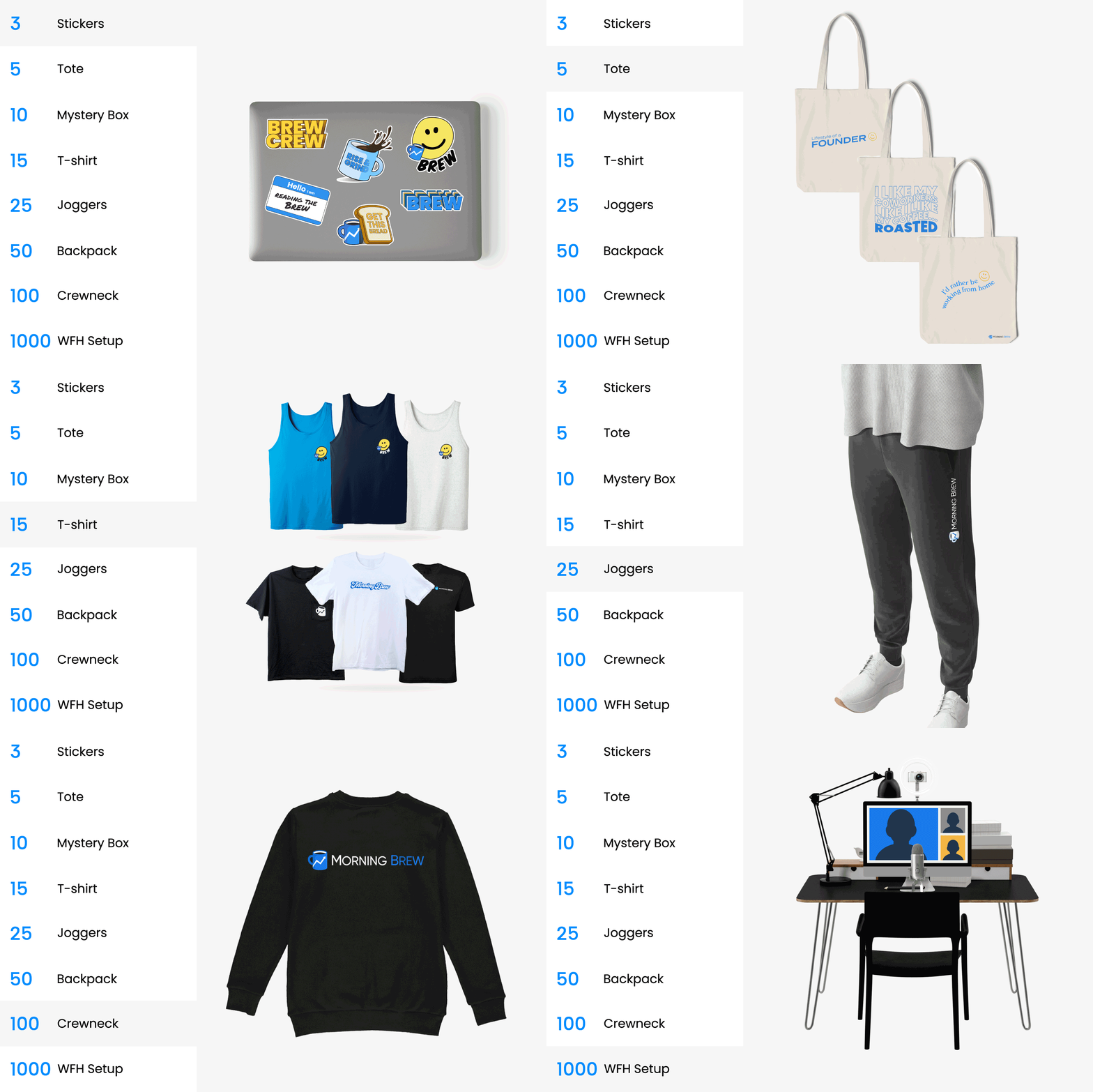
Share HR Brew with your coworkers, acquire free Brew swag, and then make new friends as a result of your fresh Brew swag.
We’re saying we’ll give you free stuff and more friends if you share a link. One link.
Your referral count: 2
Click to Share
Or copy & paste your referral link to others:
hr-brew.com/r/?kid=9ec4d467
|
|
|