Fizkes/Getty Images
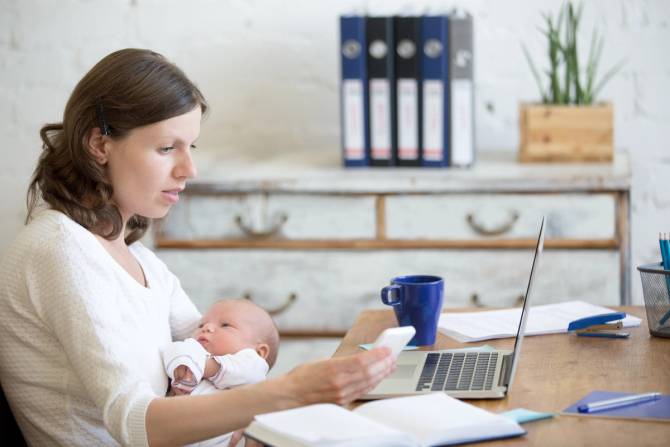
Sorting through a barrage of unread emails and Slack messages is one of the numerous challenges new parents may confront when returning to work after leave.
Some companies go as far as cutting off systems access to ensure employees disconnect while on parental leave, according to Lori Mihalich-Levin, CEO of Mindful Return, which advises employers on how to support parents in their transition back to work. But such restrictive policies can also cut off employees from vital networks with fellow parents.
Avoiding interference. Company approaches to managing systems access for employees while they’re on parental leave differ greatly, according to Mihalich-Levin. So, too, do employees’ preferences for disconnecting while they’re away.
Mihalich-Levin, who is a lawyer, said partners at law firms often feel responsible for their clients while on leave, and want to make sure no one interrupts their email interactions. Associates, on the other hand, might want to turn their email off.
“There are employees…who say, ‘Thank goodness I don’t have access,’ or ‘I don’t want access,’ or ‘I’m not going to look,’” said Mihalich-Levin. “And then others who want to do a periodic check-in for whatever reason, whether personal or professional.” There’s no one-size-fits-all answer, she said, and some employers will address the issue on a case-by-case basis.
Keep reading.—CV
|
|
The world of work is changing rapidly (no secret there), and employees are looking for fairer, more fulfilling positions.
Add the emergence of AI to this mix, and the recruitment industry is feelin’ more unpredictable than, well, ever.
Success comes down to doing more with less, and Indeed FutureWorks is the event with the tools and solutions to help you do it. This premier HR event includes opportunities to:
- explore relevant and interactive roundtable discussions
- network and join a growing community of global talent leaders
- discover the latest tech and techniques to make hiring and retaining top talent easier
Join Indeed FutureWorks in person from September 20–21 at the Georgia World Congress Center in Atlanta, or enjoy complimentary virtual access on September 21.
View the agenda and save your seat.
|
|
Stefani Reynolds/Getty Images
Designing a comprehensive benefits plan these days can seem a bit like navigating a complex maze. And the challenges grow as the workforce does. That’s the case at AT&T, the nation’s largest telecommunications company. As of January, AT&T had 160,700 employees based across the world, including in all 50 US states. AT&T benefits cover 1 million employees, retirees, and eligible dependents.
“That diversity is a source of strength, but also creates this layer of complexity that we have to think about when we are trying to design our benefits,” said Jeff Tzeng, AT&T’s SVP of health and well-being, who joined the company in a newly created role last year.
Tzeng and Julianne Galloway, AT&T’s VP of global benefits, told HR Brew that the company recently rolled out a number of new benefits as part of a broader focus on holistic well-being.
Why AT&T expanded benefits. AT&T seeks to prioritize “holistic well-being by encouraging healthy behaviors and creating space for employees to dedicate time to their wellness,” according to its human capital management report, whether that’s social, physical, emotional, or financial.
Keep reading.—CV
|
|
Francis Scialabba
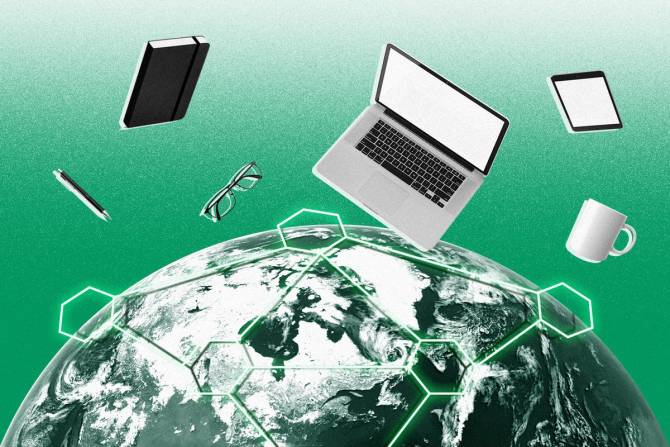
The Department of Labor estimates that remote work in the US is on the decline, and more employers are instituting mandatory return-to-office policies. But in other parts of the world, many remote workers are getting more protections.
Where in the world? Last week, the Mexican Labor Department issued a directive around remote work, the Associated Press reported. Employees now have a “right to disconnect” and be unavailable during non-working hours if they work from home at least 40% of the time. Additionally, employers must pay for essential remote work tools including internet, ergonomic chairs, and electricity.
The Mexican government also mandates that remote workers be paid the same amount as onsite employees, and government inspectors can visit an employee’s home to ensure it’s safe, well-ventilated, and well-lit. Employees will have to inform their employer if they change their address, as well as document work-related costs and care for any employer-provided equipment, according to Banderas News.
Mexico will begin enforcing the new measures in six months, Mexico News Daily reported.
Satellite view. Mexico is just the latest country to establish rules for remote employees, following on the heels of the Czech Republic, Ireland, Argentina, and several other countries. Similar legislation is not likely in the US, according to some experts.
|
|
|
Share the love: Retention, productivity, and morale improve when employees feel appreciated. Get employee recognition right by joining Blueboard’s webinar on July 20, 2023, at 10am PST. You’ll learn from the pros about how to improve recognition, what to avoid, and how your org can get started with a step-by-step framework to drive real results. Save your spot.
|
|
Francis Scialabba
Today’s top HR reads.
Stat: 23% of US workers say they’ve postponed health checkups because of work conflicts. (Aflac)
Quote: “Generative AI is the future of workplace technology, with untapped potential to transform HR processes.”—Kim Kohlman, VP of HCM operations at Hearst, on AI’s burgeoning role in the people profession (ZDNet)
Read: Military spouses have consistently high unemployment rates; the federal government is considering action to hire them. (Military.com)
Workin’ it: Indeed FutureWorks is the premier HR event confronting the rapidly changing world of work with fresh tech, techniques, and solutions. Join in person from September 20–21 or enjoy complimentary virtual access by registering.*
*This is sponsored advertising content.
|
|
|