|
Happy Monday! You might want to go on an extra Irish coffee run for any coworkers who are still looking a little green from a wild weekend. 
In today’s edition:
 Hello, my name is… Hello, my name is…
 Gone global Gone global
 Chief chat Chief chat
—Kristen Parisi
|
|
Francis Scialabba
|
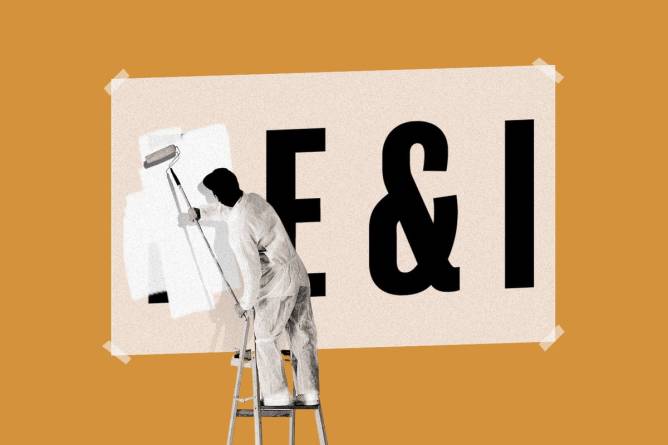
Purpose-driven. Office of inclusion. Head of belonging. Cultural transformation. These are terms some companies are using that seem to describe diversity initiatives without saying DE&I.
Emphasis on diversity, equity, and inclusion (DE&I) surged in 2020, largely due to the cultural reckoning surrounding the police murder of George Floyd, which put a spotlight on persisting racial inequities in the US. But nearly four years later, dwindling budgets, politics, and legal woes have some programs shifting in strategy and name. While some experts believe that the industry was already changing course, one academic says the shift may negatively impact the communities that built DE&I.
How we got here. In 2020, corporate America examined how it was contributing to systemic racism, responding with shows of solidarity, followed by proclamations to do better, in part through DE&I investments. All of a sudden, the industry, which has existed since the 1960s, was booming, and DE&I roles jumped by 55%.
Those investments were somewhat short-lived. When tech layoffs swept the country in late 2022, DE&I appeared to be considered expendable by some large companies, as Google, Meta, and others cut their DE&I leaders loose. In June 2023, DE&I faced new scrutiny, following SCOTUS’s affirmative action decision. Some questioned the programs’ merits, with conservative activists calling for their abolishment and bringing lawsuits against some companies for their DE&I initiatives. In response, the term “DE&I” has started to fade.
Keep reading here.—KP
|
|
PRESENTED BY FRANKLIN TEMPLETON
|
|
Employee retention is a tough game to master. But 92% of American workers say there are things that could convince them to stay longer in the company. So what might those things be? Hint: Your benefits plan plays a major role.
For the scoop on benefits, check out Franklin Templeton’s Voice of the American Workplace Survey. Find out what your employees want from their workplaces and get the data you need to build stronger loyalty and attract top talent.
Want a sneak peek? You’ll get the deets on:
- what’s driving turnover
- how financial stress is burdening employees
- strengthening employer–employee relationships
Meet your employees where they want.
|
|
Hiroshi Watanabe/Getty Images
|
Executives at Reddit, Workhuman, Salesforce, and Greenhouse, companies that each have a presence outside of the US, shared some simple ways leaders can think of inclusion from a global standpoint during a panel at SXSW's Ireland activation on March 11.
Time doesn’t revolve around the US. Vijay Pendakur, founder and principal at Vijay Pendakur Consulting, and a senior strategist for employee experiences at Salesforce, told the audience that technology can encourage behavioral changes in employees. Slack’s schedule integration tool, for example, tells users if a meeting is scheduled outside business hours, forcing them to think about what’s convenient for colleagues in other regions. “Small little bumps and jostles can lead towards behavioral change or awareness opening,” he said. “Oftentimes, when it comes to American exceptionalism, and us being the center of power, there is this unconscious harm.”
Diversify your employee resource groups. Meisha-ann Martin, senior director of people analytics and research at Workhuman, said that while Workhuman is based in the US, global employees are encouraged to join its ERGs.
Keep reading here.—KP
|
|
Jim Link
|
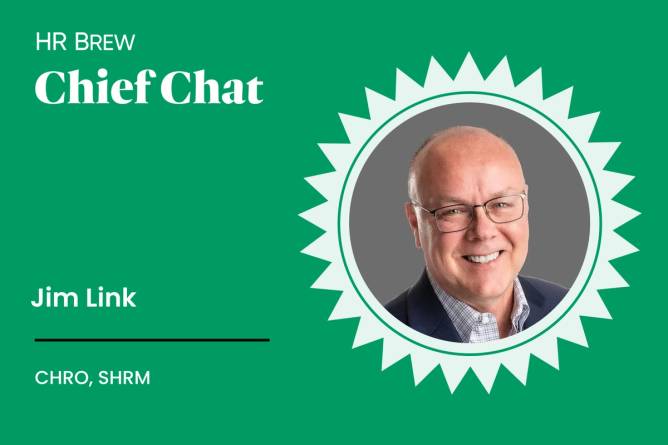
CHROs have a lot on their plates, but imagine being the CHRO that also helps more than 330,000 other HR professionals!
Well, that’s exactly what Jim Link, CHRO at SHRM, has been doing since joining the organization over two years ago. Link, who has more than 30 years of experience in corporate HR, met with HR Brew at SXSW to discuss his role, how he uses AI, and SHRM’s civility campaign.
This interview has been edited for length and clarity.
What’s your role at SHRM like?
If you think about impacting the world of work, there’s no higher calling than the world of employment. Helping someone achieve life sustaining income is at the very core and nature of what we do as an organization.
Keep reading here.—KP
|
|
TOGETHER WITH TAKE COMMAND
|
|
Try the ICHRA way. A recent survey found that HR pros’ biggest challenges include tight budgets, time constraints, and stress. Quick way to lessen these pressures? Individual coverage health reimbursement arrangements (ICHRAs). Take Command’s 5 Ways HR Leaders Can Win with ICHRA webinar will show you how it’s done. Save your spot.
|
|
Level up your career with these resources from our sponsors!
|
|
Francis Scialabba
Today’s top HR reads.
Stat: ~80,000 human services workers in New York City will receive a cost-of-living adjustment. (NYC.gov)
Quote: “There are studies across academic disciplines showing that empathy is a skill that all humans, regardless of gender, are able to perform. But it’s become so equated with being a girl or woman that we don’t see the training; we see it as how girls and women inherently are.”—Rose Hackman, author of Emotional Labor, on how women often take on jobs that carry more emotional labor (BBC)
Read: AI could change how some labor laws impact employers with hourly workers. (Reuters)
Benefits bonanza: 72% of workers indicate challenges when it comes to understanding the benefits their company offers. Franklin Templeton’s Voice of the American Workplace Survey is here to change that stat. Check it out.* *A message from our sponsor.
|
|
|
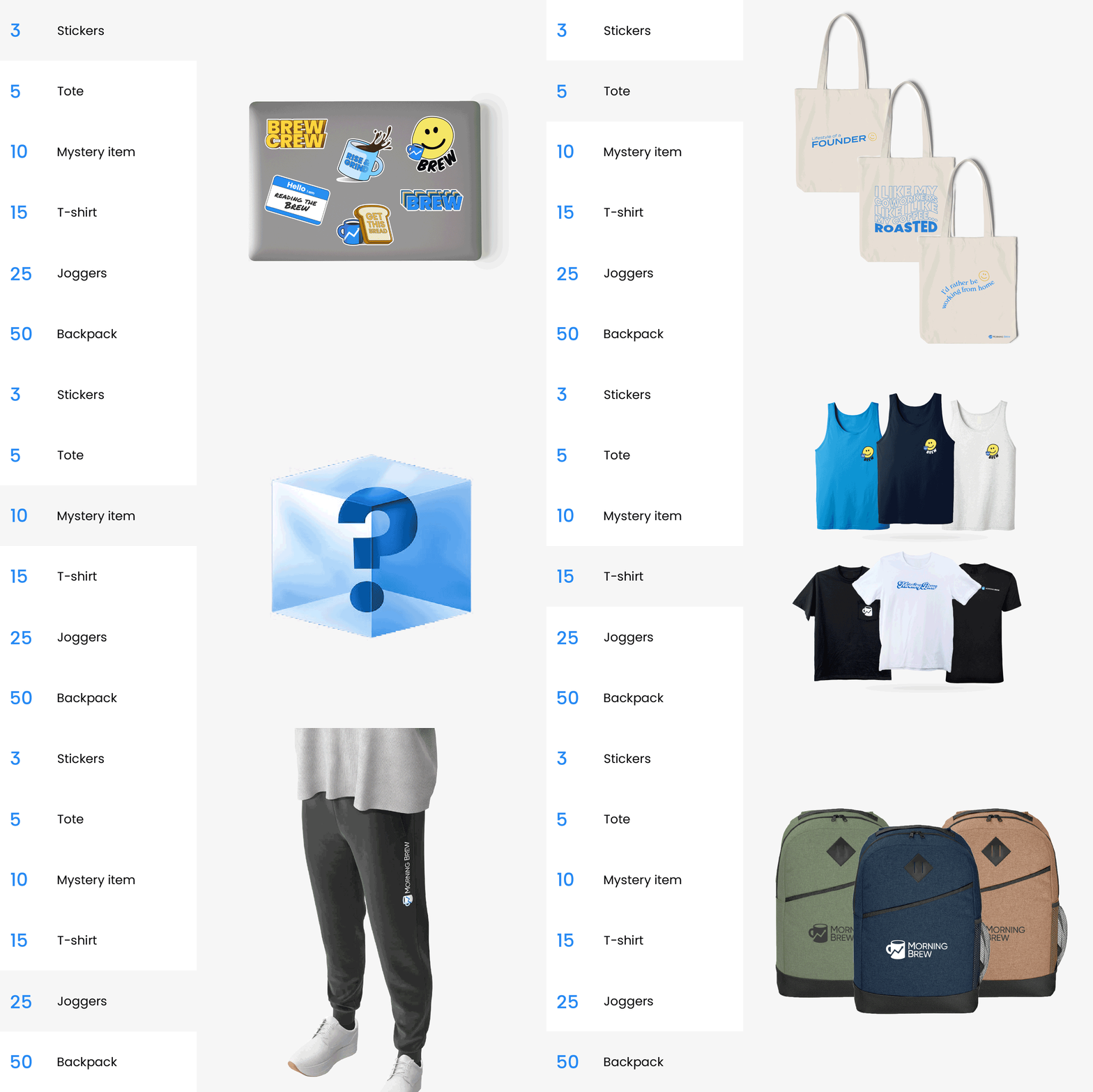
Share HR Brew with your coworkers, acquire free Brew swag, and then make new friends as a result of your fresh Brew swag.
We’re saying we’ll give you free stuff and more friends if you share a link. One link.
Your referral count: 2
Click to Share
Or copy & paste your referral link to others:
hr-brew.com/r/?kid=9ec4d467
|
|
|